 Call Us : 07971549662Call Us : 07971549662

 Send Inquiry
Semi-Automatic Sludge Dewatering Filter Press
Semi-Automatic Sludge Dewatering Filter Press Specification
- Product Type
- Semi-Automatic Sludge Dewatering Filter Press
- General Use
- Sludge Dewatering and Filtration
- Material
- Mild Steel
- Type
- Semi-Automatic
- Capacity
- 1000-5000 Liters/Hour (varies by model)
- Weight (kg)
- 1200-1800 kg
- Computerized
- No
- Automatic
- Semi-Automatic
- Ozone Generator
- No
- UV Sterilizer
- No
- Control System
- Manual/PLC Based
- Filter Bag No.
- Up to 40 Plates
- Filter Area
- 5-40 m (as per configuration)
- Flow Rate
- Up to 10 m/hr
- Voltage
- 415 V, 3 Phase
- Motor
- 1.5-3 HP
- Dimension (L*W*H)
- 3500 x 900 x 1100 mm (approx.)
- Feature
- Corrosion Resistant, High Efficiency, Low Maintenance
- Color
- Blue/White
- Plate Material
- Polypropylene
- End Plate Coating
- Epoxy Painted
- Cloth Retention System
- Mechanical
- Feed Pump Type
- Centrifugal/Diaphragm (as per requirement)
- Max Working Pressure
- 7-16 Bar
- Plate Size
- 470 mm x 470 mm (or as specified)
- Filtration Type
- Chamber Filter Press
- Discharge Type
- Manual/Automatic Cake Discharge
- Operating Temperature
- Up to 80°C
- Slurry Inlet
- Central/Inlet Side Entry
- Application
- Effluent Treatment Plants, Industrial Wastewater, Chemical & Mining, Municipal Sludge, Food Processing Industries
About Semi-Automatic Sludge Dewatering Filter Press
With a vision to be a pioneer in this domain, we are serving our respected clients by offering them supreme-grade Semi-Automatic Sludge Dewatering Filter Press. It is widely used in industries for dewatering of sludge so that they can be easily transported and discarded. This machine is available in two types namely filter presses and dewatering centrifuges. Both the types are very efficient on their own perspective. Offered Semi-Automatic Sludge Dewatering Filter Press helps in removal of disease-causing bacteria and organic matter.
Advanced Filtration Technology
This filter press uses chamber filtration technology for superior sludge dewatering performance. Polypropylene plates ensure high chemical resistance and long service life. The system supports both centrifugal and diaphragm feed pumps, adaptable to various sludge types and compositions.
Built for Industrial Reliability
Crafted with a sturdy mild steel frame and coated with corrosion-resistant epoxy, this machine withstands harsh operating environments. Its modular design accommodates up to 40 plates, scalable for capacity ranging from 5 to 40 m2 of filtration area, ensuring compatibility with projects of various sizes.
User-Friendly Operation and Maintenance
The semi-automatic filter press allows users to select between manual and PLC-based controls, tailored to process demands. Mechanical cloth retention and adaptable cake discharge options make it easy to operate and maintain, helping reduce downtime and operational costs.
FAQ's of Semi-Automatic Sludge Dewatering Filter Press:
Q: How does the semi-automatic sludge dewatering filter press operate?
A: The press operates by feeding slurry into the filter chambers, where pressure is applied (up to 16 bar), separating solids from liquid. The filtrate exits while sludge accumulates on the cloth, forming a cake. Discharge can be manual or automatic, depending on configuration.Q: What types of feed pumps are compatible with this filter press?
A: The filter press can utilize either centrifugal or diaphragm feed pumps, selected according to the specific nature and consistency of the slurry to optimize filtration efficiency within the desired capacity range.Q: When should I choose central versus side entry slurry inlet?
A: Central entry is ideal for uniform slurry distribution in larger plate stacks, promoting even cake formation. Side entry may be preferred for smaller systems or certain slurry types to enhance process control and prevent blockages.Q: Where can this filter press be installed?
A: This filter press is suitable for installation in a variety of settings, including industrial wastewater treatment plants, effluent treatment facilities, chemical and mining operations, municipal sludge processing, and food industry applications across India or internationally.Q: What process does the chamber filter press use for filtration?
A: The chamber filter press utilizes high-pressure filtration between polypropylene plates lined with filter cloths. Slurry is pumped into the chambers, pressure separates solids from liquid, and the resulting cake is retained for manual or automatic discharge.Q: What are the key benefits of using this filter press?
A: Key advantages include high efficiency in sludge dewatering, robustness for industrial use, corrosion resistance, user-friendly operation, scalability, and low maintenance. These features contribute to lower operating costs and reliable, long-term performance.Q: How often does the filter cloth need maintenance or replacement?
A: Maintenance intervals depend on the type and volume of sludge processed but, generally, with routine checks and proper cleaning, filter cloths can have extended service life, minimizing replacement frequency and operational interruptions.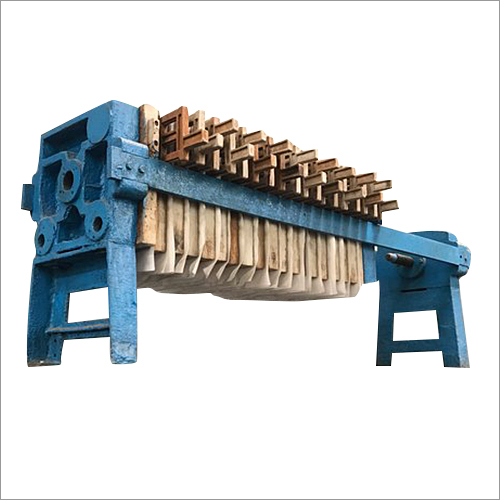
Tell us about your requirement

Price:
Quantity
Select Unit
- 50
- 100
- 200
- 250
- 500
- 1000+
Additional detail
Mobile number
Email


Address
BRAHMA FABRICON
GST : 24ASEPS9270J2Z8
GST : 24ASEPS9270J2Z8
- Survey Block No. 332, Por-Kayavarohan Road, Beside "D" Mart Ware House, At & Po : Ankhi, Por, Vadodara - 391243, Gujarat, India
- Phone :07971549662
- Send Inquiry
 Send Inquiry
 Send Inquiry
 Send SMS
 |
BRAHMA FABRICON
All Rights Reserved.(Terms of Use) Developed and Managed by Infocom Network Private Limited. |
